
What Happens When Dry Fruits Are Stored Incorrectly? Common Mistakes That Ruin Freshness and Nutrition- By Dayal Dry Fruits, Jammu – Serving Freshness Since 1981

Are You Storing Your Dry Fruits the Right Way?
Dry fruits are among the healthiest foods you can add to your diet. Rich in protein, healthy fats, vitamins, minerals, and antioxidants, they are a valuable investment in your family's health.
However, even the finest quality almonds, walnuts, cashews, pistachios, raisins, and dates can lose their freshness and nutritional value if stored improperly.
At Dayal Dry Fruits, one of the most common questions we receive is:
"Why do dry fruits sometimes taste stale, bitter, or lose their crunch?"
The answer often comes down to improper storage.
Let's explore what happens when dry fruits are stored incorrectly and how you can keep them fresh for longer.
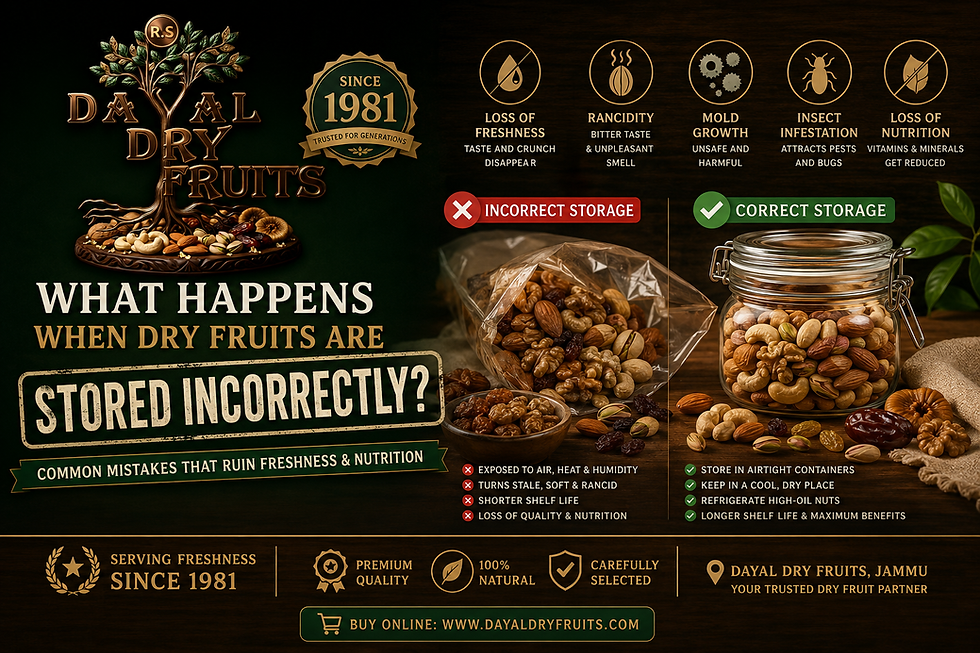
Why Proper Dry Fruit Storage Matters
Many people assume dry fruits last forever because they contain little moisture. While dry fruits have a longer shelf life than fresh fruits, they are still sensitive to:
Heat
Humidity
Air exposure
Sunlight
Improper packaging
When exposed to these conditions, dry fruits begin to deteriorate much faster.
1. Dry Fruits Can Turn Rancid
One of the biggest problems caused by improper storage is rancidity.
Dry fruits such as:
Walnuts
Almonds
Pistachios
Cashews
contain healthy natural oils. When these oils are exposed to heat and oxygen, they begin to oxidize.
Signs of Rancid Dry Fruits
Bitter taste
Sharp or unpleasant smell
Oily surface
Loss of natural flavor
Once nuts become rancid, their quality and taste decline significantly.
2. Loss of Nutritional Value
People buy dry fruits because they are rich in:
Protein
Healthy fats
Vitamin E
Antioxidants
Magnesium
Iron
Improper storage accelerates nutrient degradation.
Excessive heat and prolonged exposure to air can reduce the potency of certain vitamins and antioxidants, meaning you're getting fewer health benefits from your dry fruits.
3. Dry Fruits Lose Their Crunch and Freshness
Fresh almonds should be crunchy.
Fresh pistachios should be crisp.
Fresh walnuts should have a pleasant nutty texture.
When dry fruits absorb moisture from the environment, they become:
Soft
Chewy
Rubbery
Less flavorful
This is especially common during monsoon seasons and in humid climates.
4. Increased Risk of Insect Infestation
Improperly stored dry fruits can attract:
Pantry moths
Beetles
Food insects
This is more likely when dry fruits are:
Stored in open packets
Kept in warm environments
Left exposed for long periods
Premium dry fruits deserve proper protection through airtight storage containers.
5. Mold Growth in Humid Conditions
Although dry fruits contain little moisture, humid environments can introduce moisture into storage containers.
Over time, this may lead to:
Mold formation
Spoilage
Unpleasant odors
Moldy dry fruits should never be consumed and should be discarded immediately.
6. Dry Fruits Absorb Unwanted Odors
Did you know that dry fruits can absorb surrounding smells?
If stored near:
Onions
Garlic
Strong spices
Pickles
they may develop unwanted flavors and aromas.
This is one reason airtight containers are highly recommended.
7. Reduced Shelf Life
Properly stored dry fruits can remain fresh for many months.
Incorrect storage can cut their shelf life dramatically.
Approximate Shelf Life Comparison
Storage Method | Shelf Life |
Open Packet | Few Weeks |
Pantry Storage | Several Months |
Airtight Container | Longer Freshness |
Refrigeration | Up to 1 Year for Many Nuts |
The right storage method helps you get maximum value from your purchase.
Common Dry Fruit Storage Mistakes
Many households unknowingly make these mistakes:
❌ Leaving Dry Fruits in Original Opened Packaging
Opened packets allow air and moisture to enter.
❌ Storing Near Gas Stoves or Ovens
Heat accelerates spoilage.
❌ Keeping Dry Fruits in Direct Sunlight
Sunlight can damage flavor and nutrients.
❌ Using Non-Airtight Containers
Exposure to air reduces freshness.
❌ Buying Large Quantities Without Proper Storage
Bulk purchases require proper storage space to maintain quality.
How to Store Dry Fruits Correctly
To keep your dry fruits fresh and nutritious:
Use Airtight Containers
Glass jars and high-quality food-grade containers work best.
Refrigerate High-Oil Nuts
Especially:
Walnuts
Almonds
Pistachios
Mixed nuts
3. Store in a Cool, Dry Place
Avoid heat, humidity, and direct sunlight.
Buy Fresh Stock from Trusted Sellers
Freshness begins with quality sourcing.
Dayal Dry Fruits' Expert Recommendation
At Dayal Dry Fruits, Jammu, we carefully select, handle, and store premium-quality dry fruits to ensure customers receive the freshest products possible.
Once you bring your dry fruits home:
✔ Transfer them to airtight containers
✔ Refrigerate walnuts and almonds for long-term freshness
✔ Keep them away from moisture and sunlight
✔ Consume within the recommended shelf life
These simple steps can help preserve taste, nutrition, and quality for months.
Final Thoughts
Improper storage can turn premium dry fruits into stale, flavorless, and less nutritious snacks. Heat, moisture, air, and sunlight are the biggest enemies of freshness.
By storing your dry fruits correctly, you can enjoy better taste, longer shelf life, and maximum health benefits.
At Dayal Dry Fruits, we have been committed to delivering fresh, high-quality dry fruits since 1981. And we believe that proper storage is just as important as buying the right product.
Buy fresh. Store smart. Enjoy longer.


Comments