
Fresh Dry Fruits vs Old Stock Dry Fruits: How to Spot the Difference

When buying dry fruits, most people compare prices—but very few check whether the dry fruits are actually fresh or old stock.
Two packets of almonds may look similar, but one may be freshly harvested while the other has been sitting in storage for months. The difference affects taste, nutrition, shelf life, and overall quality.
At Dayal Dry Fruits, Jammu's trusted dry fruit destination Since 1981, we believe customers deserve premium-quality products that are fresh, naturally flavorful, and carefully stored.
Here's how you can easily identify the difference between fresh dry fruits and old stock dry fruits before spending your money.
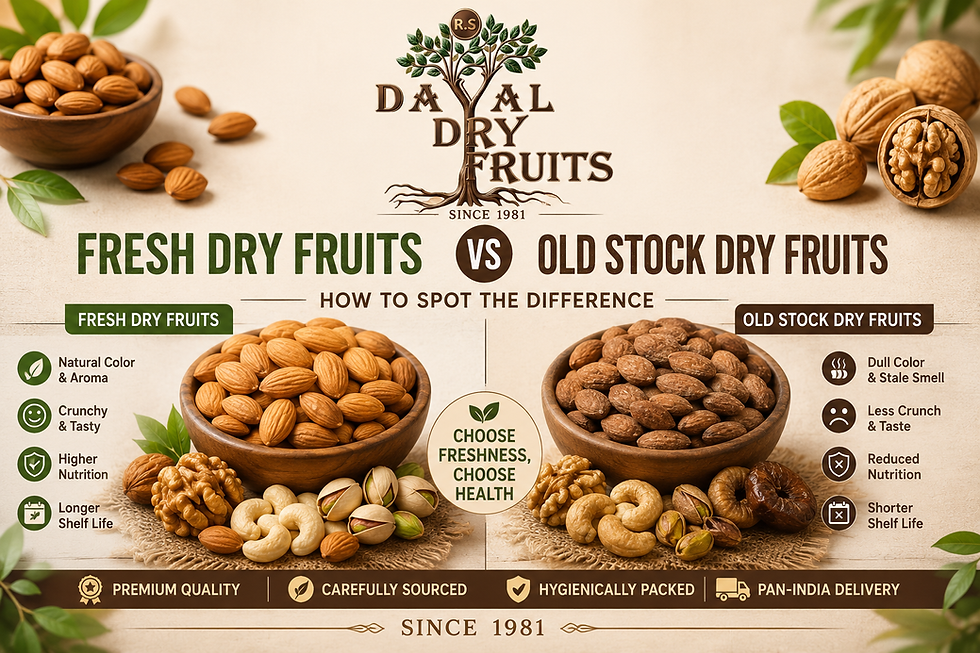
Why Freshness Matters
Fresh dry fruits contain:
Better natural flavor
Higher nutritional value
Better crunch and texture
Natural aroma
Longer shelf life after purchase
Lower chances of fungal growth or insect infestation
Old stock dry fruits gradually lose:
Essential oils
Natural sweetness
Crunchiness
Vitamins and antioxidants
Fresh fragrance
In simple words, fresh dry fruits are healthier and taste significantly better.
1. Check the Color
Fresh dry fruits usually have a bright, natural appearance.
Fresh Almonds
Light brown skin
Even color
Smooth surface
Old Almonds
Dull appearance
Dark patches
Wrinkled skin
Fresh Walnuts
Creamy white kernels
Uniform color
Old Walnuts
Yellowish or brown kernels
Dark spots
Dry appearance
Fresh Cashews
Cream-white color
Old Cashews
Yellow tint
Slight discoloration
Natural color is one of the biggest signs of freshness.
2. Smell the Dry Fruits
Fresh dry fruits always have a pleasant natural aroma.
If you notice:
Musty smell
Sour smell
Oil-like odor
Stale smell
then they may be old stock.
This is especially true for:
Walnuts
Almonds
Pistachios
Pine nuts (Chilgoza)
3. Feel the Texture
Fresh dry fruits should feel:
Firm
Crisp
Heavy for their size
Old stock often feels:
Soft
Rubbery
Too dry
Lightweight
4. Taste Makes the Difference
Fresh dry fruits have:
Rich natural sweetness
Creamy texture
Pleasant nutty flavor
Old stock often tastes:
Bitter
Flat
Dry
Slightly sour
Walnuts especially develop bitterness when they become old because their healthy oils begin to oxidize.
5. Check for Oiliness
Some dry fruits naturally contain healthy oils.
Fresh walnuts, almonds, and pine nuts contain these oils in balanced amounts.
Old stock may show:
Oily surface
Sticky texture
Rancid smell
This happens when natural fats begin to spoil.
6. Look for Insects or Powder
One of the biggest warning signs is:
Small holes
Fine powder inside packet
Tiny insects
Web-like threads
These indicate poor storage or old inventory.
Always avoid such products.
7. Check Packaging and Storage
Fresh dry fruits should be stored:
Away from sunlight
In airtight containers
In cool temperatures
With proper moisture control
At Dayal Dry Fruits, products are stored under hygienic conditions to preserve freshness and taste.
Fresh vs Old Stock Dry Fruits Comparison
Feature | Fresh Dry Fruits | Old Stock Dry Fruits |
Color | Bright and natural | Dull and faded |
Aroma | Pleasant and nutty | Musty or stale |
Taste | Sweet and rich | Bitter or flat |
Texture | Crunchy | Soft or dry |
Nutrition | Higher | Reduced over time |
Shelf Life | Longer | Shorter |
Which Dry Fruits Spoil the Fastest?
These require extra care because they contain more natural oils:
Walnuts
Pine Nuts (Chilgoza)
Pecans
Pistachios
Almonds
These should always be purchased from trusted sellers with proper storage practices.
Tips to Buy Fresh Dry Fruits
✔ Buy from reputed dry fruit stores
✔ Avoid unusually cheap prices
✔ Purchase from shops with high product turnover
✔ Check packaging date whenever available
✔ Smell and inspect loose dry fruits before buying
✔ Store them properly after purchase
How Dayal Dry Fruits Ensures Freshness
For over 44 years, Dayal Dry Fruits has been committed to providing premium-quality dry fruits to families across Jammu and customers throughout India.
When you shop with us, you get:
Premium-grade almonds, walnuts, cashews, pistachios, raisins, figs, saffron, and seeds
Carefully sourced products
Hygienic storage
Fresh stock with regular inventory turnover
Honest quality grading
Trusted service since 1981
Pan-India delivery
Our goal is simple—deliver fresh, nutritious, and authentic dry fruits that your family can enjoy with confidence.
Frequently Asked Questions (FAQs)
How can I tell if dry fruits are fresh?
Look for natural color, pleasant aroma, crunchy texture, and a rich taste. Avoid products with dull color, stale smell, or bitterness.
Can old dry fruits make you sick?
If they become rancid or develop mold due to poor storage, they may cause digestive discomfort and should not be consumed.
Which dry fruit goes bad the fastest?
Walnuts, pine nuts, and pecans have higher natural oil content and can spoil faster if not stored properly.
Should dry fruits be refrigerated?
Yes. Refrigeration helps preserve freshness, especially for walnuts, almonds, pistachios, and pine nuts during warmer months.
Where can I buy fresh dry fruits in Jammu?
If you're looking for premium-quality fresh dry fruits, Dayal Dry Fruits has been serving customers since 1981, offering carefully sourced products, proper storage, and trusted quality.
Conclusion
Fresh dry fruits don't just taste better—they also provide better nutrition, longer shelf life, and a more satisfying eating experience. By checking the color, aroma, texture, taste, and storage conditions, you can easily avoid old stock and choose the best quality for your family.
At Dayal Dry Fruits, we believe freshness is the foundation of quality. That's why every batch is selected and stored with care, ensuring you receive premium dry fruits you can trust. Whether you're buying almonds, walnuts, cashews, pistachios, raisins, or authentic Kashmiri saffron, you can count on our commitment to quality that has earned customers' trust since 1981.


Comments