
Bad Almonds vs Good Almonds: How to Spot the Difference (Complete Buyer's Guide)- By Dayal Dry Fruits, Jammu – Serving Freshness Since 1981
- dayaldryfruitsjamm
- 1 day ago
- 3 min read

Almonds are one of the most popular and nutritious dry fruits in the world. Whether you eat them for heart health, weight management, brain function, or simply as a healthy snack, quality matters.
Unfortunately, not all almonds available in the market are fresh or premium quality. Many buyers unknowingly purchase old, stale, or poorly stored almonds that have lost their taste, nutrition, and freshness.
So how can you tell the difference between good almonds and bad almonds?
In this complete buyer's guide, the experts at Dayal Dry Fruits explain how to identify high-quality almonds and avoid wasting money on inferior products.

Why Almond Quality Matters
Fresh almonds are rich in:
Protein
Healthy fats
Vitamin E
Fiber
Magnesium
Antioxidants
However, when almonds are stored improperly or become old, they can lose their nutritional value and develop an unpleasant taste.
Choosing premium-quality almonds ensures you get the maximum health benefits and the best flavor.
How to Identify Good Quality Almonds
1. Check the Color
Good quality almonds usually have:
✔ A uniform light brown color
✔ Smooth skin without dark patches
✔ Natural appearance without excessive discoloration
Fresh almonds look vibrant and healthy.
What to Avoid
✘ Dark spots
✘ Black patches
✘ Uneven coloring
✘ Signs of mold
These are often indicators of poor storage or aging.
2. Look at the Shape and Size
Premium almonds are generally:
✔ Well-shaped
✔ Full-bodied
✔ Uniform in size
✔ Free from cracks and damage
High-quality almonds should appear plump and properly developed.
Warning Signs
Avoid almonds that are:
✘ Shriveled
✘ Extremely small
✘ Broken excessively
✘ Damaged by insects
3. Smell the Almonds
One of the easiest ways to identify fresh almonds is by smell.
Fresh Almonds
✔ Mild
✔ Nutty
✔ Pleasant aroma
Bad Almonds
✘ Sour smell
✘ Chemical-like odor
✘ Paint-like smell
✘ Musty aroma
If almonds smell unusual, they may have become rancid.
4. Taste Test
A quick taste test can reveal a lot about almond quality.
Good Almonds
✔ Sweet and nutty flavor
✔ Crisp texture
✔ Fresh aftertaste
Bad Almonds
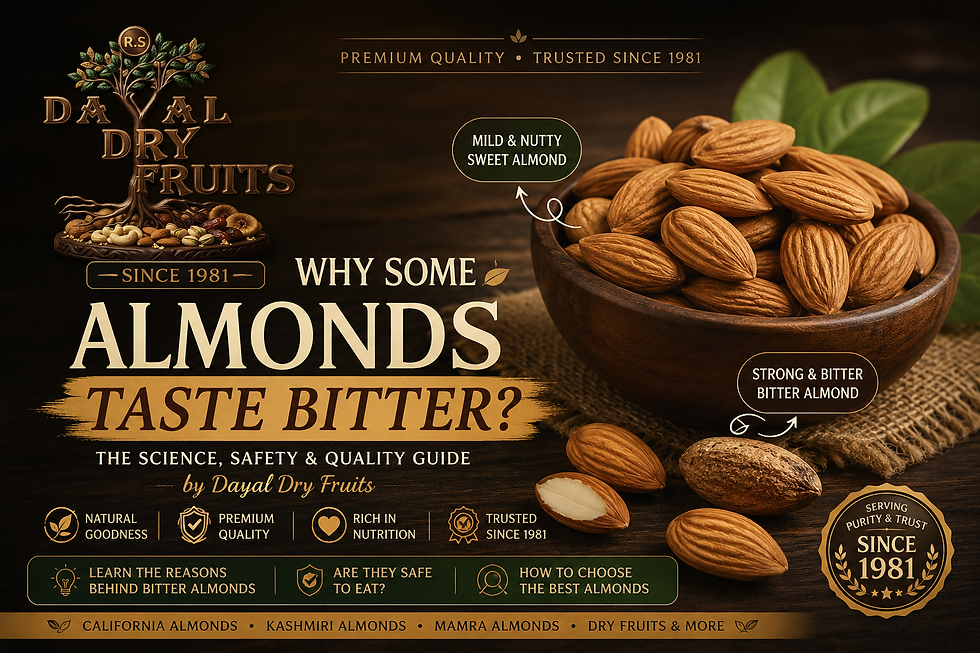
✘ Bitter taste
✘ Sour flavor
✘ Stale or unpleasant aftertaste
A bitter or rancid taste often indicates that the natural oils inside the almonds have deteriorated.
5. Check the Texture
Fresh almonds should feel:
✔ Firm
✔ Dry
✔ Crunchy
Poor Quality Almonds
✘ Soft texture
✘ Rubbery feel
✘ Excessive moisture
✘ Loss of crunchiness
Moisture can significantly reduce almond shelf life and increase the risk of spoilage.
Common Signs of Bad Almonds
If you notice any of the following, avoid consuming the almonds:
Mold growth
Bitter taste
Sour smell
Excessive moisture
Insect damage
Dark discoloration
Soft or spongy texture
These signs usually indicate poor storage conditions or old stock.
Why Do Almonds Go Bad?
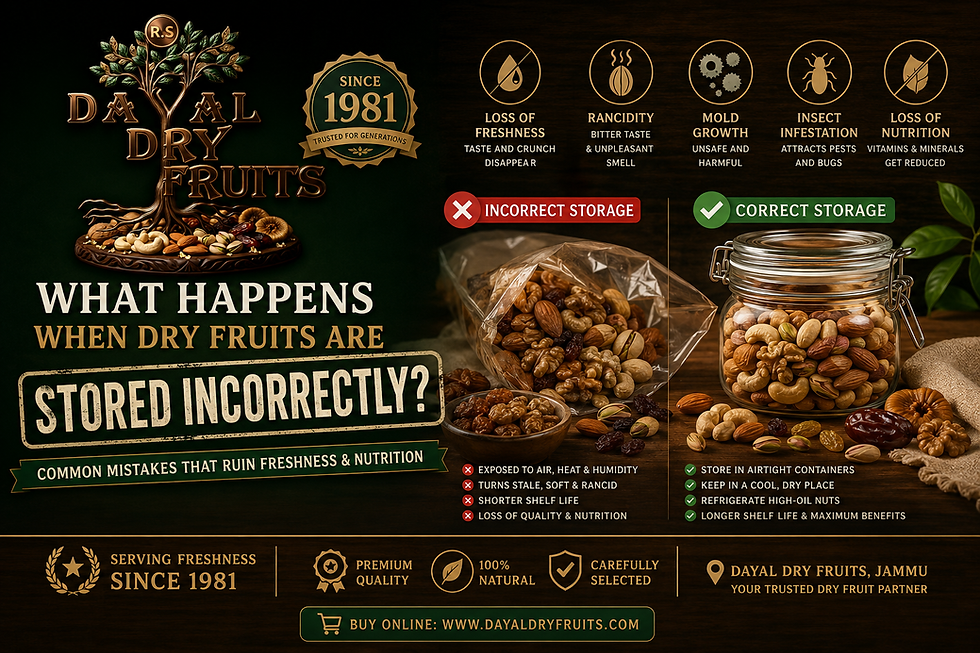
Almonds contain healthy natural oils that can become rancid when exposed to:
Heat
Air
Humidity
Direct sunlight
Improper storage is one of the biggest reasons almonds lose freshness.
This is why purchasing from trusted dry fruit sellers is important.
How to Store Almonds Properly
To keep almonds fresh for longer:
Storage Tips
✔ Store in airtight containers
✔ Keep away from sunlight
✔ Refrigerate during hot weather
✔ Avoid moisture exposure
✔ Buy from reputable suppliers
Proper storage helps maintain taste, crunch, and nutritional value.
Kashmiri Almonds vs Ordinary Almonds
Many customers prefer premium Kashmiri almonds because they are known for:
Rich taste
Superior freshness
Excellent texture
Natural sweetness
High nutritional value
When sourced from trusted suppliers, Kashmiri almonds offer a premium dry fruit experience.
Why Cheap Almonds Can Cost You More
Many buyers choose almonds solely based on price. However, low-priced almonds often:
Contain old stock
Have poor storage history
Lack freshness
Offer reduced nutritional value
Investing in premium-quality almonds ensures better taste, longer shelf life, and greater health benefits.
Remember: quality matters more than price when it comes to dry fruits.
Why Customers Trust Dayal Dry Fruits
At Dayal Dry Fruits, Jammu, we have been helping customers choose premium dry fruits since 1981.
Our almonds are carefully sourced, properly stored, and quality-checked to ensure maximum freshness and taste.
When you buy from Dayal Dry Fruits, you receive:
✔ Fresh stock
✔ Premium quality almonds
✔ Authentic dry fruits
✔ Trusted service
✔ Four decades of experience
Final Verdict
The difference between good almonds and bad almonds is easy to spot once you know what to look for.
Always check the:
Color
Smell
Taste
Texture
Overall appearance
Fresh almonds should be crunchy, nutty, and naturally sweet. If they smell sour, taste bitter, or appear damaged, it's best to avoid them.
For premium-quality almonds and authentic dry fruits, trust Dayal Dry Fruits – Serving Freshness Since 1981.

Comments